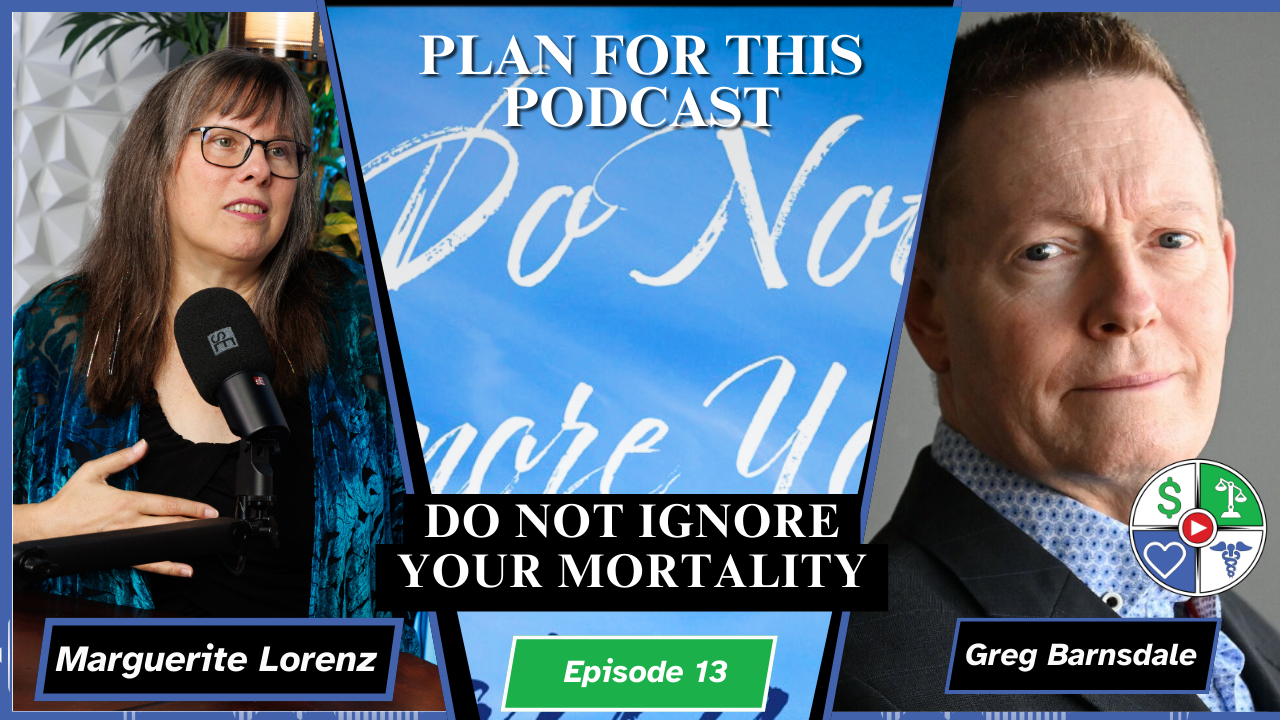
Do Not Ignore Your Mortality A Conversation with Author Greg Barnsdale
Most people avoid talking about mortality. They push off decisions, delay paperwork, and tell themselves they will “get to it later.” In this emotional and practical episode of Plan for This, Marguerite sits down with Greg Barnsdale, author of Do Not Ignore Your Mortality, to explore why early planning matters, not only for ourselves, but for the people we love.
Greg shares how his mission to help others prepare for life’s inevitable transitions became deeply personal after a sudden brain tumor diagnosis. His insights reveal how quickly life can shift, how unprepared many families are for crisis, and how much peace of mind comes from getting affairs in order now rather than later.
Whether you are building your first estate plan, revising an old one, or navigating blended family dynamics, this conversation offers clarity, compassion, and actionable steps to secure your legacy.
Why Most People Avoid Talking About Mortality
Many people know they should prepare for the future, however they struggle to face their own mortality. Greg and Marguerite discuss how fear, guilt, superstition, and avoidance shape people’s decisions. Some worry that talking about death will “invite” it, others simply feel overwhelmed by paperwork, legal terms, or family dynamics.
Greg explains that the real barrier is usually emotional, not technical. Planning forces us to acknowledge that life is uncertain, that relationships are fragile, and that our time is limited. This emotional resistance is normal, however it becomes dangerous when it prevents us from organizing documents, clarifying wishes, or choosing the right people to step in when needed.
By naming these fears, Greg helps listeners understand that avoidance does not protect anyone, it simply transfers the burden to loved ones later. The first act of planning is giving yourself permission to be honest about what you want your legacy to look like.


The Moment Everything Shifted: Greg’s Brain Tumor Diagnosis
Shortly after publishing Do Not Ignore Your Mortality, Greg received life-changing news. Doctors discovered a large brain tumor that required immediate treatment. The diagnosis was unexpected, shocking, and deeply humbling, yet it also affirmed his core message: life does not wait until we are ready.
Greg shares how this moment clarified his priorities. Planning ahead was no longer a philosophical exercise, it was survival. Because he had already organized his documents, outlined his wishes, and assigned roles to the right people, he could focus entirely on treatment and healing.
Marguerite notes that sudden medical events often expose the gaps in planning. Families scramble for passwords, insurance information, beneficiary designations, and essential documents. They argue, panic, or freeze. Greg’s story demonstrates the opposite, when your house is in order, crisis does not become chaos.
This portion of the conversation is vulnerable and honest, encouraging listeners to act now rather than wait for a scare.
Blended Families and the Complexity of Modern Estate Plans
Estate planning becomes more complex when dealing with blended families, second marriages, or adult children from previous relationships. Greg and Marguerite highlight common issues such as:
-
Competing expectations between biological and step-family members
-
Choosing successor trustees who can remain neutral
-
Balancing new relationships with long established obligations
-
Ensuring clear communication so no one feels blindsided
They emphasize that blended families must be even more intentional than traditional families. Without clarity, conflict is almost guaranteed later. Greg explains that planning conversations should center on values, fairness, and respect rather than assumptions or outdated ideas of inheritance.
Marguerite adds that successor trustees should be chosen based on temperament, integrity, and availability, not tradition or birth order. The goal is not to honor someone’s feelings in the moment, but to choose the person who can handle the responsibility years from now without bias.

The Modern Must-Haves: Digital Access, Passwords, and Paperwork
In today’s world, estate planning goes beyond wills and trusts. Greg and Marguerite discuss the modern essentials every family needs, such as:
-
Password lists
-
Digital access instructions
-
Online account management
-
Healthcare directives
-
Updated beneficiaries
-
Lists of subscriptions and autopay services
-
Location of important documents
Greg stresses that most families fall apart during crisis not because they lack love, but because they lack information. When documents are incomplete or scattered, families lose days, weeks, or even months trying to gather what they need.
The goal is simple: make your plan easy to find, easy to understand, and easy to follow. This reduces stress, confusion, and conflict when loved ones are already overwhelmed.
Facing mortality can be uncomfortable, however it becomes much easier when we understand it as a gift to those we love. Greg Barnsdale’s story reminds us that life can change in an instant, yet preparing ahead of time protects our families from stress and conflict.
Whether you are navigating a blended family, handling digital assets, or choosing a successor trustee, the best time to begin your plan is before a crisis — not after.
If you want guidance, community, and tools that help you stay organized, consider becoming a PlanFan today.
👉 Become a PlanFan today and get access to our First Steps Toolkit, member-only support, and reminders to keep your plan current. Join our community and take control of your legacy with confidence.