

Dolores’s Story | Reverse Mortgage Risks, Faith, and Protecting Aging Parents | Plan for This Ep 12
Dolores’s Story Reverse Mortgage Risks, Faith, and Protecting Aging Parents
Dolores is exactly the kind of person many of us love. She is 78, widowed, deeply rooted in her church community, and committed to giving her time and resources to others. Her son Gary has always respected that, even though he stepped away from organized religion years ago. Then a car accident on a stormy holiday weekend changed everything.
When Dolores moved into Gary’s home to recover, he began sorting through her paperwork and discovered something alarming. Her tithes had increased dramatically under the new pastor, she was falling behind on other bills, and, worst of all, she had taken out a reverse mortgage on her home at the pastor’s suggestion.
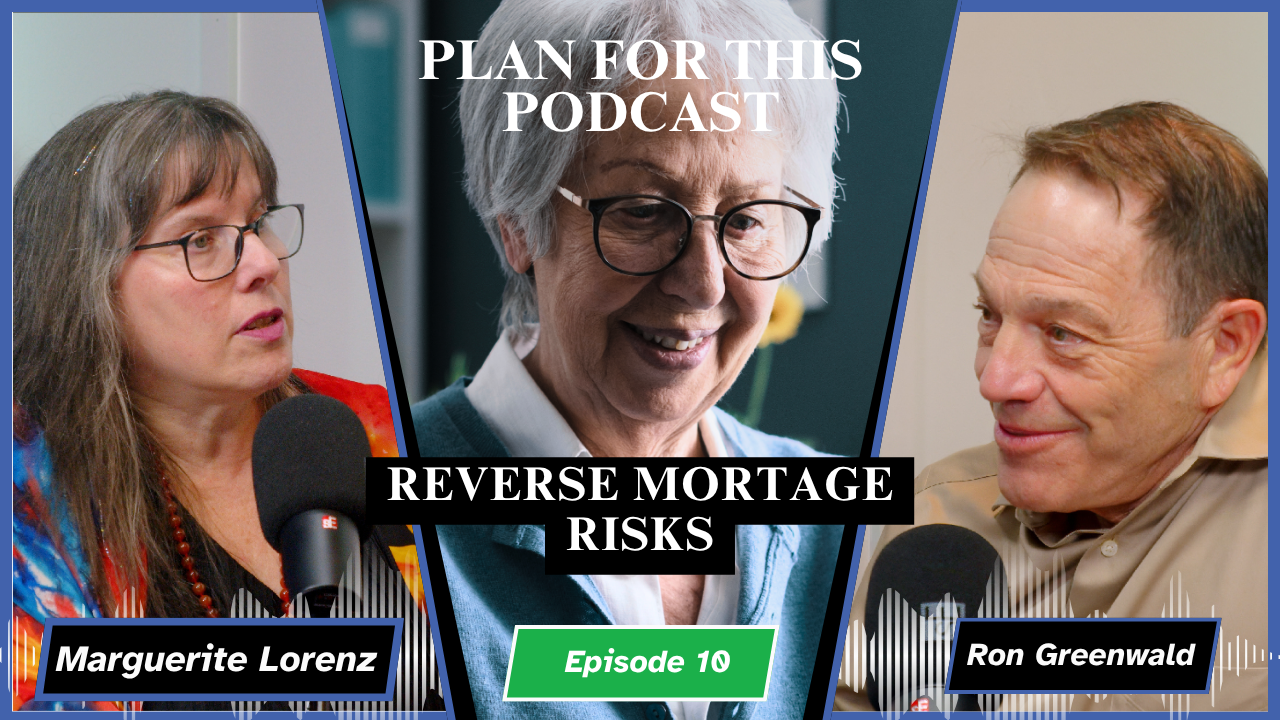
In this episode of Plan for This, Marguerite and Ron use Dolores’s story to explore reverse mortgage risks, clergy influence, and how families can protect elders without taking away their independence.
When Generosity and Pressure Collide
Dolores’s situation did not start with a reverse mortgage, it started with generosity. She had attended the same church since childhood, volunteered at events, and found meaning in service. Over time, her giving grew, then grew again, until it quietly crossed the line from generous to unsustainable.
Marguerite points out that many elders in faith communities feel an internal pressure to “give just a little more,” especially when they are praised for their commitment. At the same time, they may feel shame about not having enough or embarrassment about asking whether the giving level actually fits their financial reality. This silence is a dangerous combination.
The real issue is not faith or charity, it is the lack of a neutral conversation partner. If Dolores had a CPA, financial advisor, or fiduciary she trusted, she could have asked a simple question: “Can I safely afford to give this much and still fund my own future” That single question, asked early, could have changed everything.

Understanding Reverse Mortgage Risks Before You Sign
Reverse mortgages are not inherently evil, however they are serious financial tools with long term consequences. In Dolores’s case, the pastor’s recommendation to take out a reverse mortgage moved things from risky to critical.
Marguerite explains that reverse mortgages:
-
Are designed for older homeowners, typically 62 and up
-
Turn home equity into cash, usually without monthly payments
-
Come with significant upfront costs and ongoing interest
-
Gradually erode the equity in the property over time
What many families do not realize is that the true reverse mortgage risks often appear later, when the homeowner can no longer live in the house. If Dolores remains with Gary or moves to assisted living, the loan will eventually come due. The home may then need to be sold quickly, or refinanced under pressure, just to satisfy the reverse mortgage lender.
This is why Marguerite urges anyone considering a reverse mortgage to bring in a CPA, tax professional, or estate planning attorney who is not part of the transaction. Their job is to read the contract, run the numbers, and answer one crucial question: “What does this really cost over time, and what does it do to my future options”
Where Faith Leaders Fit, and Where They Do Not
Faith communities often do beautiful work. Churches, synagogues, mosques, and temples support families through grief, illness, and loneliness. That part is healthy and necessary. The trouble comes when spiritual authority blends with financial direction in ways that bypass neutral advice.
In Dolores’s story, the pastor encouraged a reverse mortgage and was also listed as her emergency medical contact. That combination of influence and access raises serious questions. Marguerite stresses that spiritual leaders should not be the only voice in major financial decisions. Even with good intentions, they are not trained to evaluate complex loans, tax implications, or long term care expenses.
If you serve in a faith community, the takeaway is simple. Encourage your elders to seek independent advice. Suggest they talk to a CPA or attorney, rather than stepping into that role yourself. If you are an elder, treat spiritual guidance and financial guidance as two different lanes that should work together, not merge.
How Adult Children Can Step In Without Taking Over
Gary’s position is complicated. On one hand, he is worried, and rightly so. On the other, Dolores is still an adult with rights and preferences, and she may not want her son “managing” her.
Marguerite offers a practical strategy for adult children: first, get your own estate plan done. When you have navigated your own documents, you understand emotionally how vulnerable it can feel, and you gain credibility when you talk to your parents.
Instead of opening with “Mom, I need to see your accounts,” Gary can say, “I just finished my estate plan. Here is what I learned, here is how it protects my kids. Can we talk about yours” That shift respects Dolores’s autonomy and frames the conversation around shared responsibility rather than control.
If Dolores is willing, the next steps might include:
-
Reviewing her existing estate plan
-
Confirming who is named as trustee, health care agent, and power of attorney
-
Deciding whether Gary should step into any of those roles
-
Bringing in a neutral professional to review the reverse mortgage and her giving
The goal is not to make Gary the “boss,” it is to build a team around Dolores so she is not managing everything alone.
Dolores’s story is not about blaming a pastor or shaming a church. It is about recognizing how easily good intentions can lead to fragile outcomes when no neutral advisor is in the room. Reverse mortgages, large charitable gifts, and community fundraising all carry real-life consequences that ripple through families for years.
Marguerite and Ron invite listeners to see planning as an act of protection, not control. That means building a team, asking hard questions before signing anything, and making sure your giving and borrowing do not quietly undermine your own security.
If you want help thinking through reverse mortgage risks, elder protection, and what “doing the right thing” looks like in your own family, consider becoming a PlanFan. You will get access to tools, definitions, and prompts that help you talk with professionals and loved ones before a crisis hits.
👉 Become a PlanFan today and get access to our First Steps Toolkit, member-only support, and reminders to keep your plan current. Join our community and take control of your legacy with confidence.