

When Your Estate Plan Is 25 Years Outdated | Lessons from Lila & Jerry’s Case | Plan for This Ep. 13
When Your Estate Plan Is 25 Years Outdated Lessons from Lila & Jerry’s Case
Estate planning is not something you complete once and never revisit. Life evolves, families change, laws shift, property ownership moves, and health concerns become more complex with age. In this episode of Plan for This, Marguerite and Ron review the case of Lila and Jerry, a couple in their seventies whose estate plan has not been updated in more than 25 years.
What begins as a simple document review reveals a familiar pattern: outdated legal language, unclear incapacity rules, amendments stacked on top of one another, and a successor trustee structure that no longer fits the reality of their lives. Marguerite guides listeners through the practical steps of updating a plan, while Ron reflects on the emotional dynamics that cause many spouses to avoid revisiting documents that feel “too complicated” or “fine the way they are.”
This blog breaks down key insights from their discussion and why updating an old plan may be the most important decision an aging couple can make.
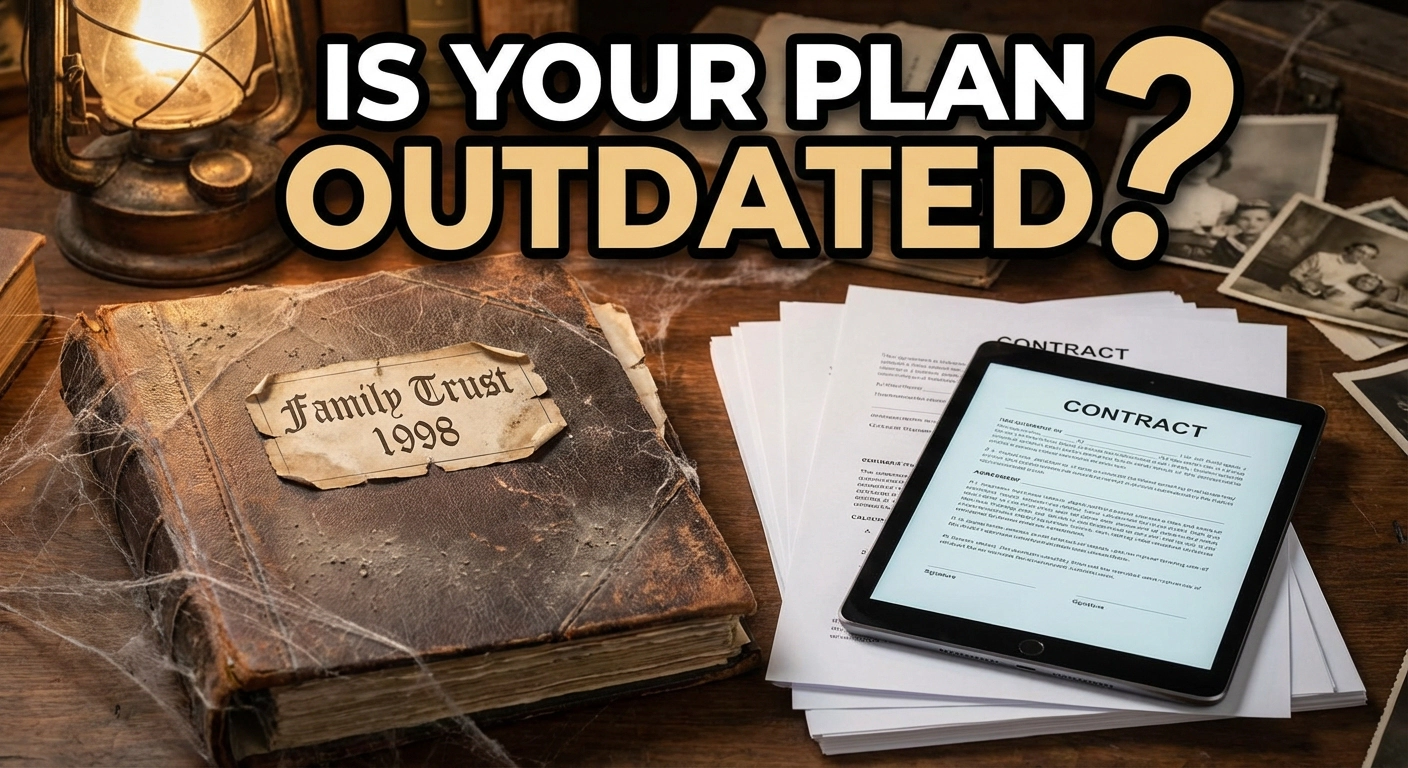
Why 20+ Year Old Estate Plans Become Dangerous
Most estate plans are built around the circumstances and laws that existed at the time they were drafted. Twenty-five years ago, blended families were structured differently, healthcare directives were less detailed, digital assets were almost nonexistent, and incapacity planning was far less sophisticated.
Marguerite points out that outdated documents can:
-
Name trustees who have since died or become incapable
-
Reference financial institutions that no longer exist
-
Omit digital account access entirely
-
Rely on obsolete legal definitions
-
Fail to address modern incapacity standards
-
Cause conflict between adult children and surviving spouses
Ron adds that the biggest misconception is believing a trust “works forever.” In reality, a trust is a living legal structure that must evolve with the people it protects. When it remains static, the plan can collapse at the exact moment a family needs it.


Amendments vs. Restatements: Which Does Your Plan Need
One of the most common issues Lila and Jerry face is having multiple amendments layered over an aging trust. Marguerite explains the difference clearly:
An amendment updates specific sections but keeps the original trust intact.
A restatement replaces the entire body of the trust while keeping its name and date for asset-titled continuity.
Most estate planners recommend a restatement when:
-
The trust is more than 10–15 years old
-
Numerous amendments create confusion
-
Life circumstances have changed dramatically
-
Incapacity or distribution rules are unclear
-
The attorney wants to avoid contradictions or outdated clauses
Ron highlights that restatements are not “starting over,” but rather preserving the structure while modernizing the content.
Incapacity Provisions: The Hidden Risk Most Couples Ignore
One of the most crucial parts of an estate plan is the definition of incapacity and who can declare it. Lila and Jerry’s documents contain vague language common in trusts drafted before the 2000s.
Marguerite explains that incapacity rules should answer:
-
Who decides someone is incapacitated
-
What medical or cognitive standards apply
-
Whether one doctor, two doctors, or family input is required
-
How authority transfers to the successor trustee
-
How capacity can be restored
Without clear incapacity triggers, banks may refuse to honor trustee changes, adult children may dispute decisions, and spouses may unintentionally lose access to necessary accounts.
Ron shares real-world examples where families were trapped in bureaucratic limbo because an outdated plan left them unable to legally step in.

Successor Trustees: Why Your Original Choices May No Longer
In their original documents, Lila and Jerry named siblings and friends who are now either deceased, elderly, or no longer appropriate choices. This is extremely common.
Marguerite notes that successor trustees should be:
-
Younger or middle-aged (not peers)
-
Financially stable
-
Organized and capable
-
Neutral during family conflict
-
Able to manage extended responsibilities
If no appropriate family member exists, a professional fiduciary may be the right choice. Ron emphasizes that trustee selection is one of the most relationally sensitive decisions, and reviewing it regularly prevents significant hardship later.
Updating an estate plan is not just administrative work it is an act of protection. Lila and Jerry’s situation mirrors millions of aging couples who drafted their plan decades ago and never revisited it. But families change, laws change, health changes, and financial lives become more complex with time.
A trust that once served a family well can become a liability if it no longer reflects reality. Reviewing and updating these documents prevents conflict, ensures a smooth transition of responsibilities, and protects the spouse who remains healthy the longest.
👉 Become a PlanFan today and get access to our First Steps Toolkit, member-only support, and reminders to keep your plan current. Join our community and take control of your legacy with confidence.